
A well-designed kitchen should do more than look beautiful from across the room. It should support the way you move, prepare, gather, and live.
That is where lighting becomes essential.
The difference between a kitchen that feels flat and a kitchen that feels considered often comes down to one principle: layering. Rather than relying on a single overhead fixture to do every job, a thoughtful lighting plan combines three distinct types of light:
- Task lighting for focused work
- Ambient lighting for comfortable movement and overall visibility
- Accent lighting for atmosphere, depth, and visual expression
Together, these layers turn the kitchen into more than a functional room. They give it rhythm, dimension, and a presence that evolves beautifully throughout the day.
1. Task Lighting: Turning the countertop into a precision workspace
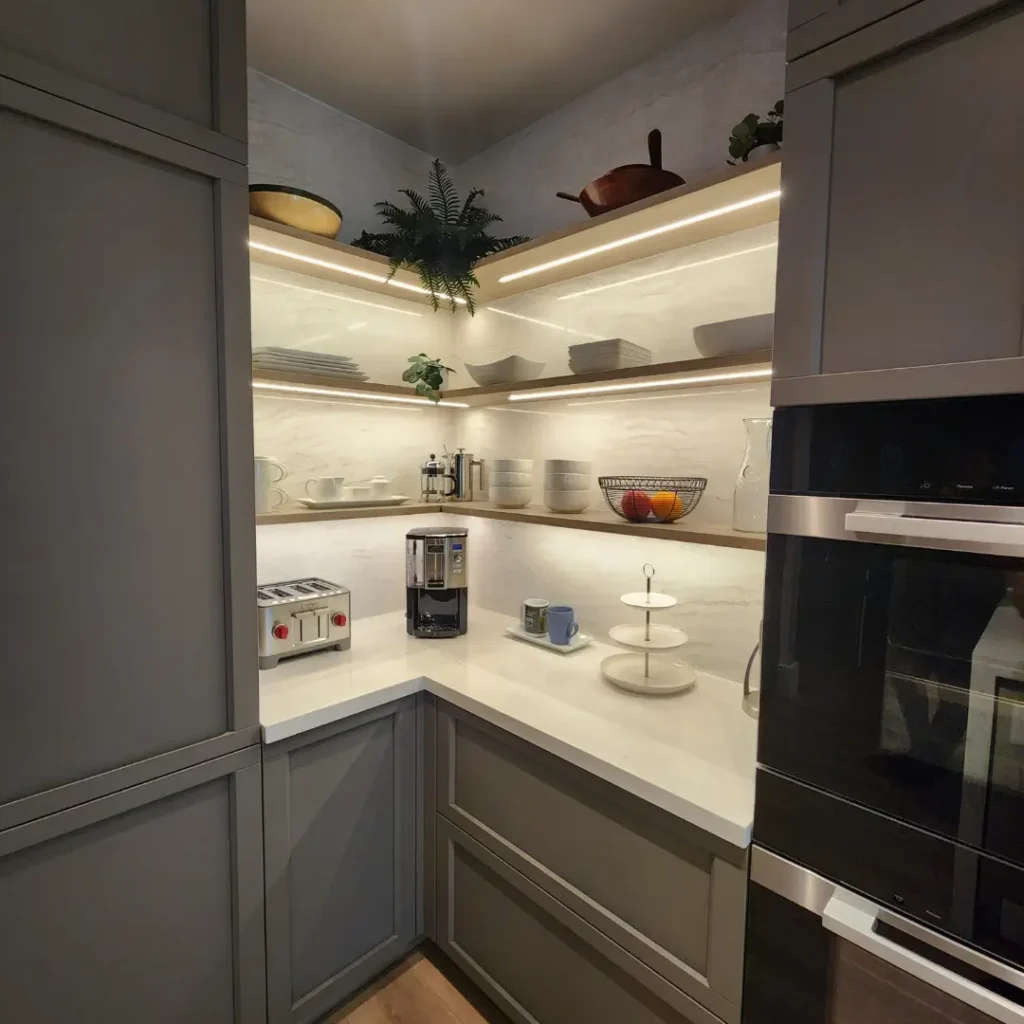
Task Lighting
The countertop is where the real work happens.
It is where ingredients are chopped, recipes are followed, coffee is prepared, and conversations often begin. Task lighting is designed to make those moments easier, clearer, and more enjoyable.
Under-cabinet lighting is one of the most effective ways to illuminate a work surface because it brings light directly to the area where your hands and eyes need it most. It reduces shadows cast by upper cabinetry and gives you a more accurate view of colors, textures, measurements, and materials.
In a kitchen with a large island, task lighting can also be integrated through carefully positioned pendants or focused ceiling fixtures. The goal is not simply brightness. The goal is clarity without glare.
When task lighting is planned well, the countertop becomes a precision workspace that supports everything from a quick weekday breakfast to a full dinner prepared for friends and family.
2. Ambient Lighting: Making movement through the kitchen feel fluid and natural
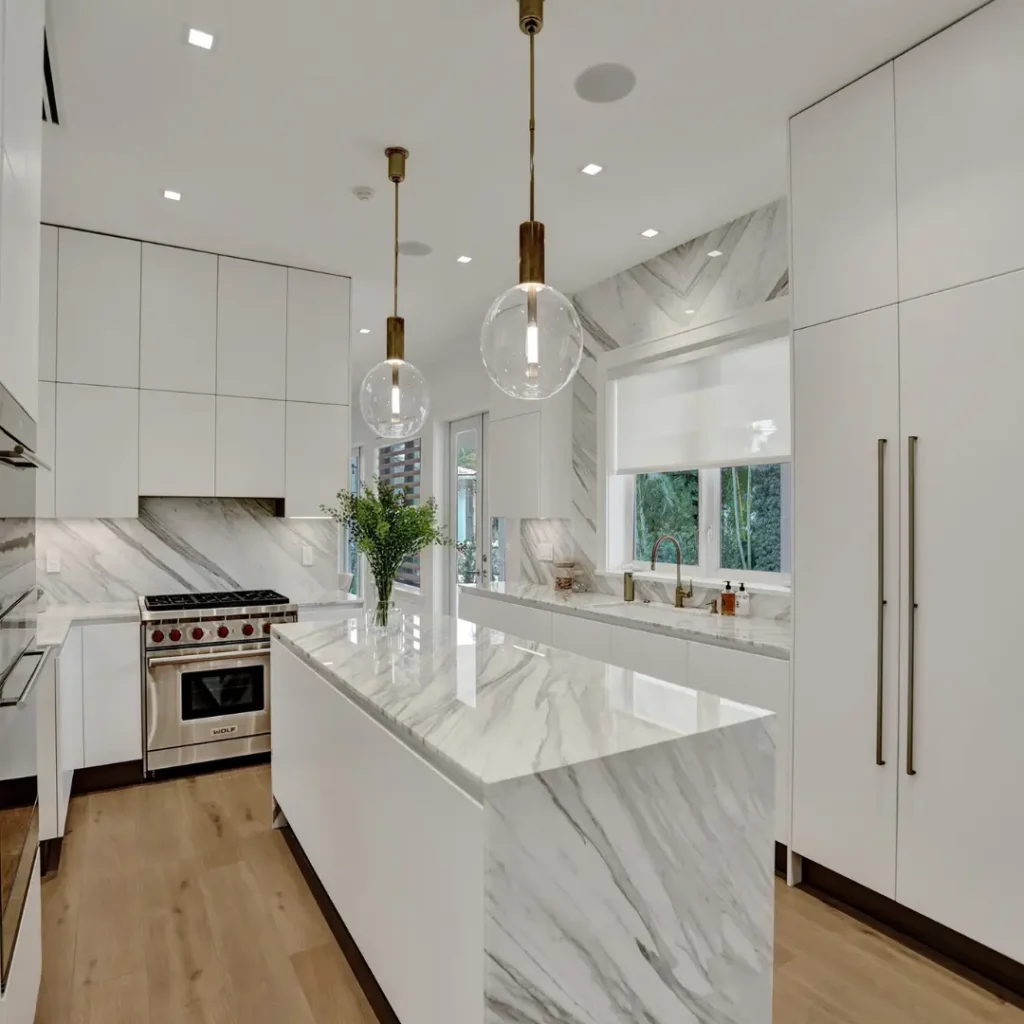
Ambient Lighting
Ambient lighting is the foundation of the room.
It provides the overall illumination that allows you to move through the kitchen comfortably, open a drawer, walk around an island, or transition between the kitchen and adjacent living areas without visual interruption.
This layer often comes from recessed ceiling lights, architectural lighting details, or softly distributed fixtures that create even illumination across the space. The most successful ambient lighting does not call attention to itself. It simply makes the kitchen feel open, calm, and easy to inhabit.
This is especially important in contemporary kitchens, where the kitchen is no longer isolated from the rest of the home. It is often connected to the dining area, living room, or outdoor space. Ambient lighting helps those areas feel visually connected while still allowing the kitchen to retain its own identity.
During the day, natural light may carry much of the room. In the evening, ambient lighting takes over, preserving a sense of warmth and ease without making the space feel overly bright or clinical.
A layered lighting plan allows this foundation to be adjusted according to the moment: bright and functional during food preparation, softer and more relaxed once dinner is served.
3. Accent Lighting: Letting materials and collectibles shine in their own right
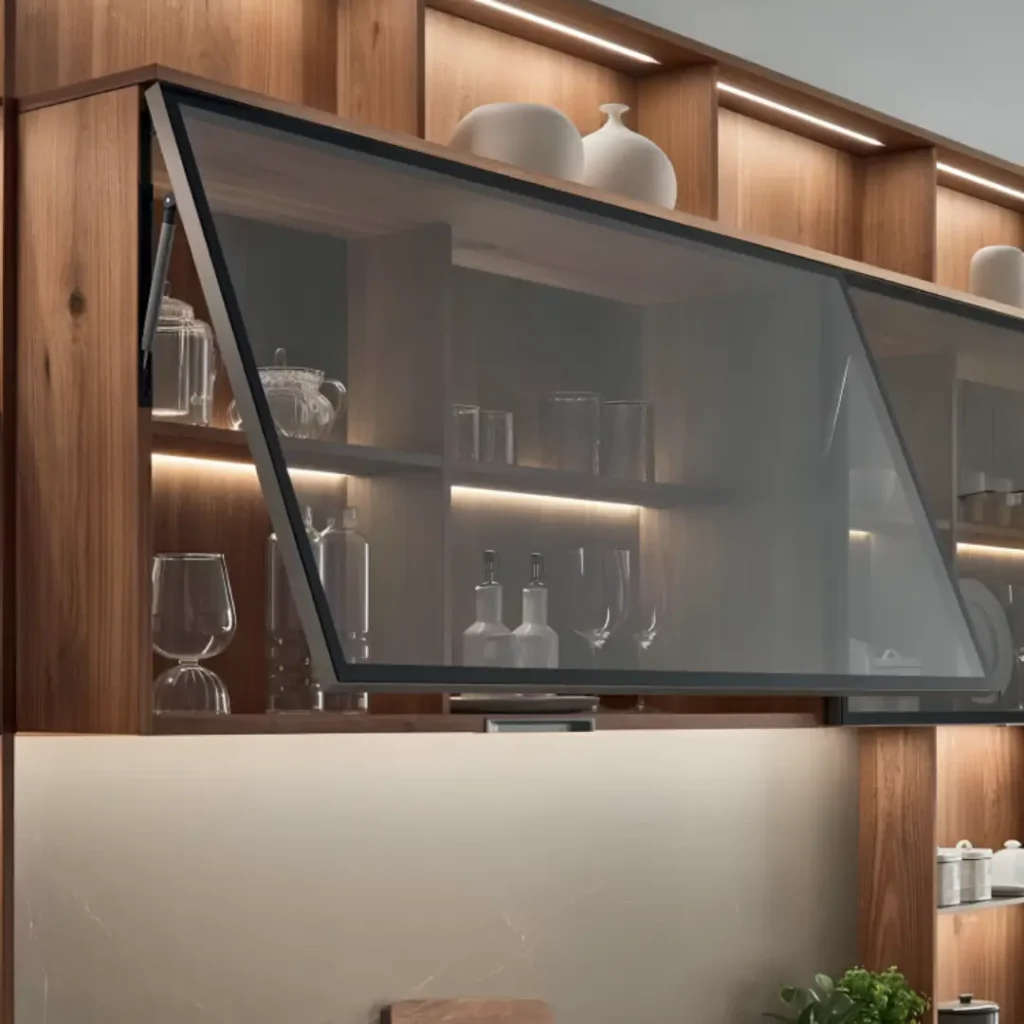
Accent Lighting
Accent lighting is where function becomes atmosphere.
It is the layer that draws attention to the details that make a kitchen personal: the grain of a wood finish, the depth of a stone surface, the texture of fluted glass, a favorite collection of ceramics, or the objects displayed on open shelving.
This type of lighting may be integrated into shelves, glass-front cabinetry, wall panels, niches, or display areas. It adds contrast and visual depth, creating points of interest beyond the primary work zones.
Accent lighting is particularly powerful in kitchens that blend into the living area. It helps cabinetry and storage feel more like furniture while giving objects and materials room to be appreciated in their own right.
Rather than making everything equally bright, accent lighting creates hierarchy. Your eye is naturally guided toward the elements worth noticing.
A softly lit shelf can make a room feel warmer. A backlit cabinet can add dimension. A subtle glow beneath an island can make the entire composition appear lighter and more architectural.
These small details often have the greatest emotional impact.
Designing with all three layers in mind
The best kitchen lighting plans are not built around one dramatic fixture. They are built around balance.
Task lighting gives you the visibility to prepare and create. Ambient lighting makes the space feel comfortable and natural to move through. Accent lighting reveals the personality, materials, and craftsmanship that make the kitchen uniquely yours.
When all three are considered from the beginning of the design process, lighting becomes part of the architecture rather than an afterthought. It supports the kitchen at every hour of the day and for every kind of moment, from early-morning coffee to late-night conversations around the island.
At Veneta Cucine, this approach aligns naturally with Green Thinking: a design philosophy that considers beauty, functionality, material choices, and everyday living as part of one complete vision.
Because a kitchen should not simply be illuminated.
It should be experienced.
Bring your kitchen lighting plan to life
The right lighting does more than brighten a room. It helps your kitchen work better, feel more inviting, and showcase the materials and details that make it yours.
Schedule a consultation with Veneta Cucine to explore a kitchen designed around the way you live, cook, gather, and move through your home.